

The Exhibition
Introduction
The Arabian Peninsula is often associated, in the popular consciousness, with the immensity of the desert. Beyond this image, powerful yet partial, lies a much richer history made of coasts, mountains, oases, maritime routes, mineral resources, settlements, exchanges, and encounters between different communities. Beyond the Desert was created to guide the public in discovering this complexity and to show how archaeology can restore historical depth to a region that has been central to relations between Asia, Africa, and the Mediterranean since antiquity.
The exhibition is organized by the University of Bologna on the occasion of the 59th Seminar for Arabian Studies, one of the main international events dedicated to the study of the Arabian Peninsula. Hosting this conference means bringing scholars, institutions, and research from various countries of Arabia and the Gulf to Bologna, but also offering citizens an opportunity to get to know a historical and archaeological heritage of extraordinary importance more closely.
For decades, the University of Bologna has been conducting research activities in the Arabian Peninsula, with a particularly significant and lasting relationship with the Sultanate of Oman. This collaboration has provided a privileged gateway for the study of landscapes, settlements, technologies, and ancient societies of southeastern Arabia. At the same time, it fits into a broader perspective, open to the entire Arabian Peninsula and its regional and international connections.
Geographical Setting
The Arabian Peninsula occupies the southwestern part of Asia and is surrounded by vast maritime spaces. To the west, it faces the Red Sea; to the southeast, the Arabian Sea and the Sea of Oman; to the northeast, the Gulf. Since antiquity, its position has made it an area of passage between the Mediterranean, East Africa, Mesopotamia, Iran, South Asia, and the Indian Ocean.
The desert is an essential component of this landscape, but it does not encompass it all. Alongside the large sandy spaces, such as the Rub al-Khali, there are mountain ranges, plateaus, coastal plains, seasonal watercourses, oases, and monsoon zones in the south of the Peninsula. This environmental variety has favored different forms of life and settlement, from pastoral communities to agricultural villages, from coastal centers to mining areas and exchange hubs.
Looking at the Arabian Peninsula beyond the desert means overcoming stereotypes and recognizing a dynamic region, crossed by land and sea routes, capable of connecting different worlds. It also means understanding how seemingly extreme environments have offered opportunities for adaptation, innovation, and exchange. It is from this perspective that the exhibition presents to the public the contribution of the University of Bologna to the archaeological study of Arabia.
The Exhibition
The Photographers
Three Omani photographers whose work runs through the exhibition, each documenting a different facet of life between the coast, the desert and the mountains.
Fahad Al Kindi
@f_kindiFahad Al Kindi is an Omani photographer whose work explores the relationship between people, place, and the passage of time. Working primarily through long-term observational projects, he is drawn to the quiet details of everyday life — moments that often pass unnoticed but reveal deeper stories about belonging, memory, and social change. His photographs examine a society in continual dialogue with its past and present, documenting the spaces where tradition and modernity meet.
Influenced by art, cinema, documentary photography and personal observation, Fahad’s images invite viewers to look beyond familiar representations of Oman and engage with the lives lived within its landscapes. His practice is guided by a belief that photography can preserve not only appearances, but also fleeting moments of human experience that might otherwise be forgotten.
Al Kindi’s works have been exhibited as part of group exhibitions at the Royal Opera House in Muscat, the Photographic Society of Oman and the Bait al Zubair Museum, as well as in a private exhibition in London. Fahad Al Kindi is also the first Arab photographer whose work has been featured in Kwartalnik Fotografia magazine (Poland).
Fahad lives and works in Muscat, Oman.
Mohammed Badr
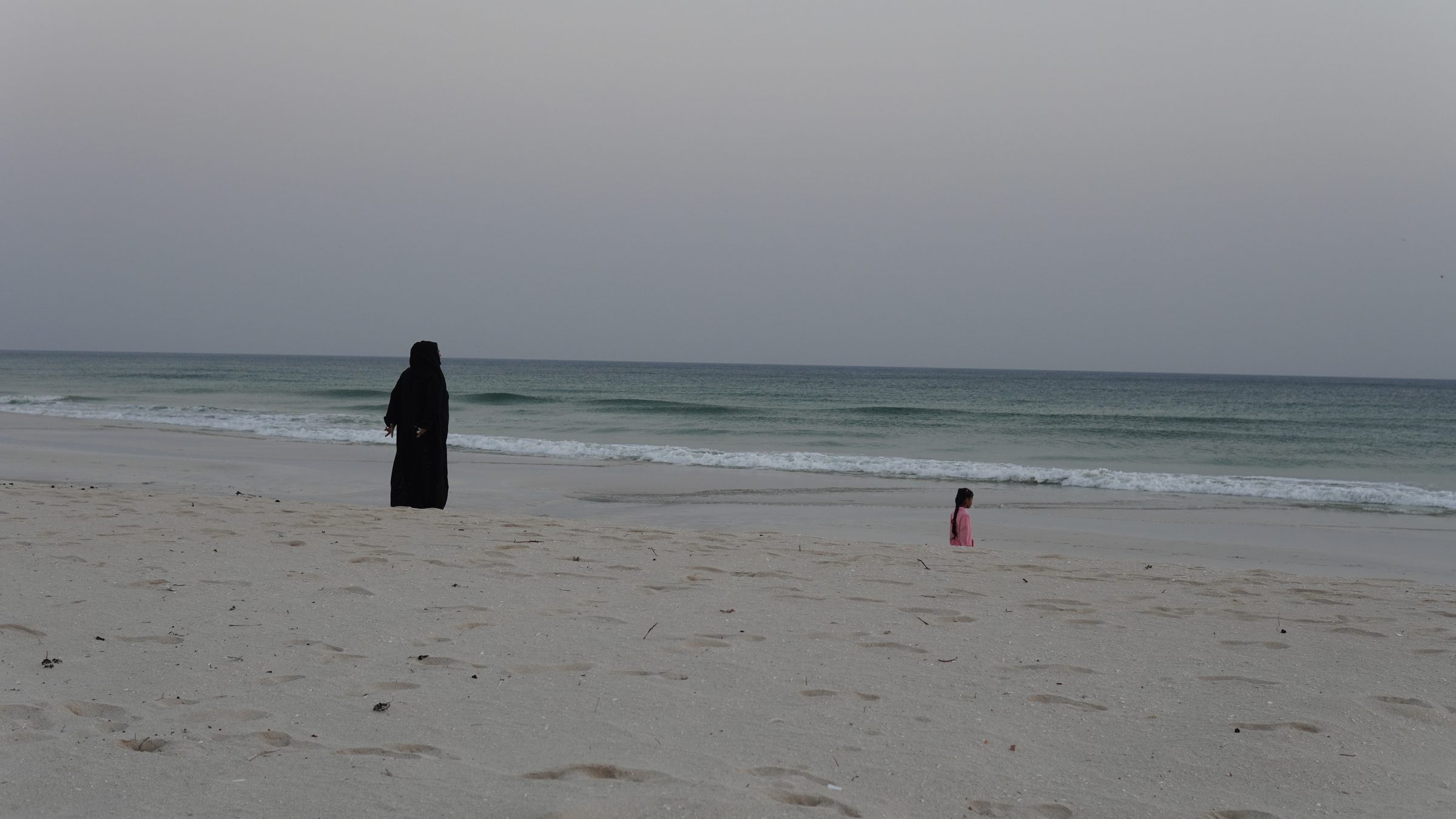
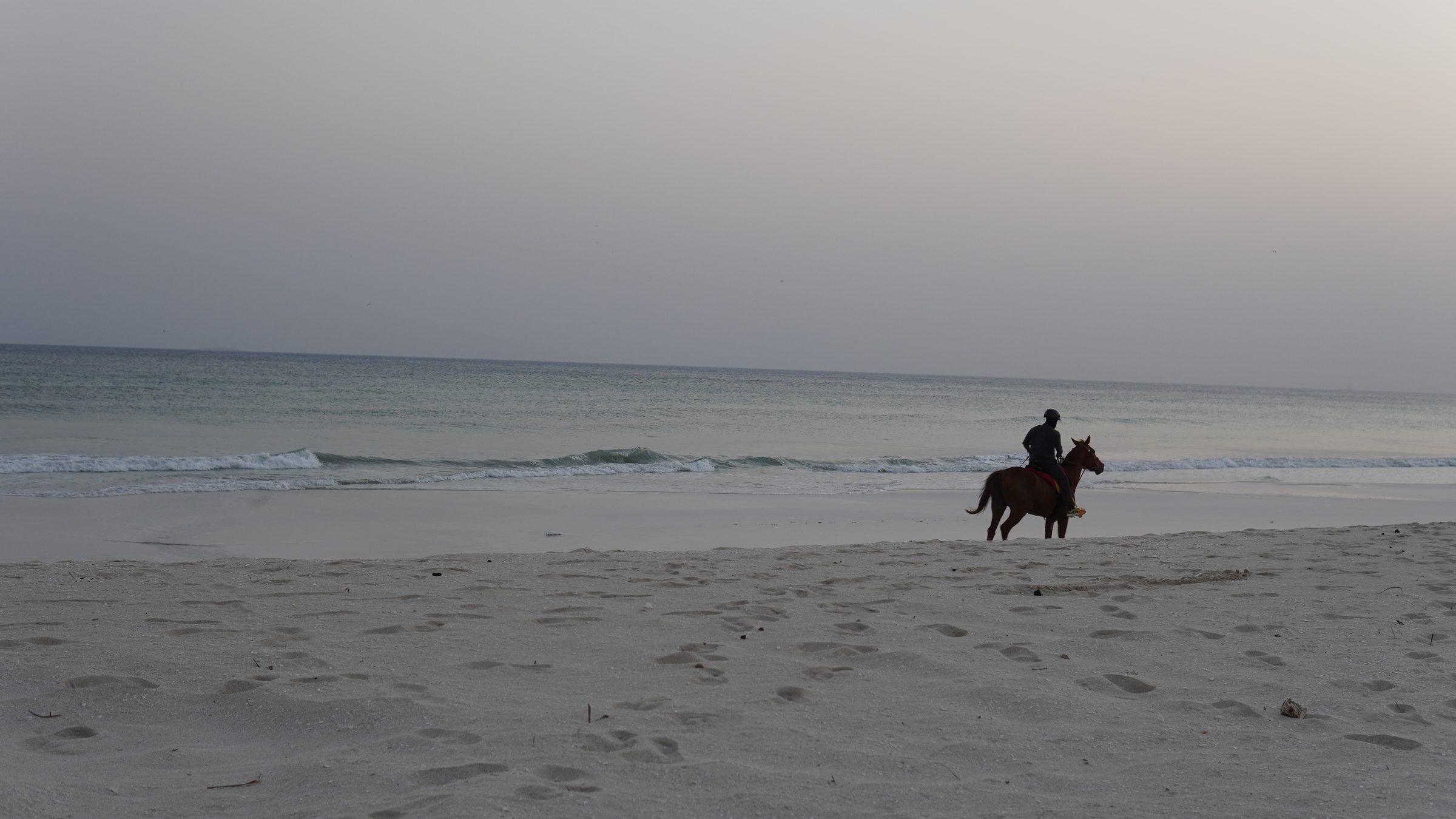
@Mo_BaderAn Omani photographer from the coastal city of Sur, where growing up around the sea naturally shaped the way he sees and documents the world. His work explores people, place, and the quiet moments that often go unnoticed. Living abroad gave him a deeper appreciation for his culture and surroundings, inspiring him to document the beauty of everyday life in Oman and share it with audiences beyond its borders.
The Waves of Us is an ongoing series that explores the relationship between people and the sea. Inspired by the coastline of Oman and the places he grew up around, the project documents the many ways people connect with the water — whether through life, reflection, play, or simply spending time by the shore. The sea becomes more than a backdrop; it becomes a space where memories are made and personal stories unfold. Through these photographs, the series reflects on connection, belonging, and the lasting presence of the sea in everyday life.
Adam Al Ghafry
@adamalghafryAdam Al Ghafry is an Omani photographer based in Salalah, Dhofar. Influenced by his studies in philosophy, religion and psychology, his work captures the relationship between people’s inner experiences and the worlds in which they inhabit. This is driven by the idea that our beliefs and cultures shape the world around us, as much as our environments and material realities shape our inner world. He believes that documentary photography is a medium that can shed light on these facets of the human condition.
Adam’s interests naturally drew him to Dhofar, where people’s ways of life are intertwined with a deep connection to the land, as they continue to adapt in the face of rapid change. His upcoming projects seek to explore the ways in which emerging technologies and industries influence the region, and how the people influence these developments in turn.
Colophon
Credits & acknowledgements
- Scientific coordination
- Eugenio Bortolini
- Coordination
- Vittoria Bianchi
- Concept
- Amanda Antonelli, Francesca Barchiesi, Vittoria Bianchi, Benedetta Gaeta, Antonios Koutroumpas
- Scientific committee
- Eugenio Bortolini, Maurizio Cattani, Dennys Frenez, Silvia Lischi, Elena Maini, Maria Pia Maiorano
- Design & graphics
- Benedetta Gaeta
- Web design
- Antonios Koutroumpas
- Social & communication
- Simone Rizzuto
- Photography
- Adam Al Ghafry (@adamalghafry), Fahad Al Kindi (@f_kindi), Mohammed Badr (@Mo_Bader)
- 3D models
- Francesca Barchiesi, Enzo Cocca, Sara Facciani, Nicolantonio Losacco
- Comic — concept & artwork
- Glauco Ambrosini, Piero Favento, Simone Rizzuto, Vittoria Bianchi
- Excavation & field photography
- Francesca Barchiesi, Vittoria Bianchi, Eugenio Bortolini, Maurizio Cattani, Enzo Cocca, Sara Facciani, Adam Al Ghafry, Antonios Koutroumpas, Antonino Vazzana
- Arabic translation
- Hamid Al Bouchouari
We thank the Ministry of Heritage and Tourism of the Sultanate of Oman, Experience Oman, the University of Bologna, AIGO S.R.L., and Comune di Bologna – Biblioteca Salaborsa.